
Tracing a Galt Street by Address
A Galt street directory search should walk one Galt address through several keepers. The Sacramento County Assessor Parcel Viewer finds the parcel and its 14-digit Galt APN. Because online owner names are suppressed, the secured roll is the next step. The Galt owner and mailing fields can then point to a Recorder party search, while the situs address stays the anchor for permits, code files, and planning notices. A reverse Galt directory or census schedule adds occupants only when a verified local collection covers the year.
Follow the Galt chain in a fixed order. Record the exact spelling, the source date, and whether each fact describes land, a mailing contact, or a person at the address. A Galt address directory built from one owner name alone will miss renters and household members.
- Enter the exact Galt address or APN in the Sacramento County Assessor Parcel Viewer and save the parcel map result.
- Obtain the Galt secured owner, situs, mailing, exemption, and deed fields at the Assessor lobby or through a focused NextRequest request.
- Search the Galt Recorder index by party, APN, document number, or recording year, then order the image when the legal description matters.
- Compare the Galt address with Galt permit reports, code files, and a planning notice file when a project provides one.
- Use a Galt voter-file route approved for the stated purpose or a verified historical directory for the year that source allows.
Galt Street Records: Assessor Fields
The Sacramento County Assessor Parcel Viewer is the core Galt street directory tool for locating Galt land. It accepts a Galt street address or a 14-digit APN and shows values, limited building characteristics, and surrounding map information. The first three APN digits identify the map book, the next three the map page, and the seventh digit a block when one exists. Galt APNs can change after a division, merger, lot-line adjustment, or tax-rate change, so retain the legal description and subdivision or lot-block data as well.
The Galt online card does not display an owner name. The underlying Galt public roll contains the secured owner, co-owner, care-of, situs, mailing street, city, state, ZIP, assessed values, exemptions, tax-rate area, zoning, land-use code, recorder page, map, and property characteristics. Galt land-use code is not the same as zoning, and a homeowner exemption is only an owner-occupancy clue.
Use the Sacramento County Parcel Viewer for the address entry point. The public records description is also set out by the Sacramento County Assessor. The public secured-roll layout names the fields available through the offline route.
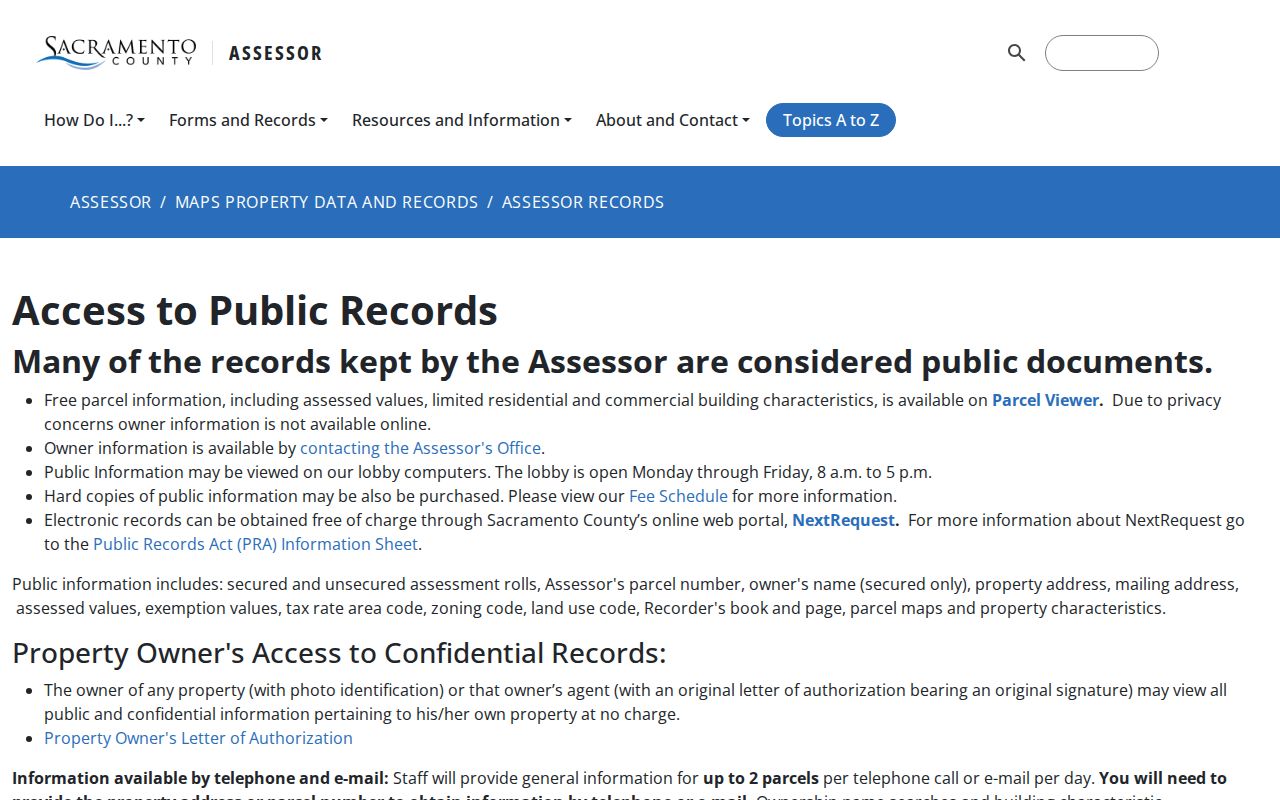
The screenshot shows why the first useful result is a parcel key, not a complete list of Galt residents.
| Field or control | Use in a Galt address search |
|---|---|
| Galt address | Street-address entry point; exact suggestion behavior is not verified. |
| Galt 14-digit APN | Stable search clue until a parcel action creates a new number. |
| Galt situs number, street, ZIP | Physical property location in the public roll. |
| Galt secured owner and care-of | Public roll fields obtained offline, not shown online. |
| Galt mailing street, city, state, ZIP | Where an owner receives notices; it may be outside Galt. |
| Galt Recorder date and page | Bridge to a deed or other recorded document. |
Galt Street Directory Terms: Situs and Mailing
Three address ideas often get folded into one. Situs is where the parcel sits. Mailing is where the Assessor sends a tax notice. Occupancy is who actually uses the place. A Galt street directory can establish the first two more readily than the third. An absentee owner may have a mailing address elsewhere, and a homeowner exemption is not proof that every household member is the owner.
Galt renters, adult children, guests, and other household members ordinarily do not appear on the secured roll. A Galt business or care-of line can add a useful lead but does not settle who lives there. The Recorder adds parties to a deed, trust, lien, or reconveyance, not a full household. When a person question is more important than the street question, use the Galt resident lookup workflow for separate identity anchors.
- Parcel
- The mapped Galt assessment unit tied to an APN.
- Situs address
- The Galt physical location used by the Assessor, permits, and maps.
- Plat
- A Galt recorded map that helps connect lots, blocks, and legal descriptions.
- Criss-cross directory
- A reverse Galt directory arranged by street and number, useful for historical occupants when a local run is verified.
Note: The Galt parcel map is an assessment graphic and should not be treated as a survey or boundary opinion.
Galt Records You Can Search by Address
Several Galt record sets take an address or APN, but each answers a different question. The Parcel Viewer locates the land. The secured roll identifies owner and mailing fields through an offline route. The Recorder connects parties to documents. Planning notices can show owners within 500 feet of a project. Permit reports date recent work. Voter data is restricted, and a reverse directory remains an unverified local gap.
| Address-keyed source | Keeper | What it shows | Access |
|---|---|---|---|
| Galt Parcel Viewer | Assessor | APN, map, values, limited characteristics | Free online, owner hidden |
| Galt secured roll | Assessor | Owner, situs, mailing, exemptions | Lobby or NextRequest |
| Galt Recorder index and image | Clerk/Recorder | Grantor, grantee, document placement, deed terms | Index free, image office or order |
| 500-foot notice list | Galt Planning | Record owners and mailing addresses near a project | Project file or CPRA |
| Permit and code files | Galt departments | Recent work, cases, and releasable contacts | Reports or focused request |
| Galt voter file | County Elections | Approved-purpose registration fields | Application and statutory purpose |
The Galt APN is the bridge. Carry it from the map to the roll, then to the Recorder, permit, tax, or planning file. A Galt street name alone is weaker because old legal descriptions and changed parcel numbers can outlast the modern number.
Walking Galt Deed Records by Street
The Sacramento County recorded-document index is party-led, even when the research starts with a Galt address. Search the Galt owner name from the secured roll, then narrow by APN, approximate recording year, document number, book, or page. The Galt portal has basic and advanced modes, a filing-code route, primary, secondary, and tertiary name groups, and placement fields. The exact dynamic code list and live result columns were not captured, so keep the query broad enough to catch an older spelling.
A Galt result can show a party name and role, document type, recording date, document number or book and page, and sometimes an APN. It cannot replace the image. The legal description, signatures, consideration, and later marginal entries need an office view or paid copy. The index reaches 1849, while Galt documents from 1850 onward may be viewed at the Recorder office.
The Recorder's document-recording information explains coverage and access. This captured view of the Galt street directory source keeps the difference between index and image visible.
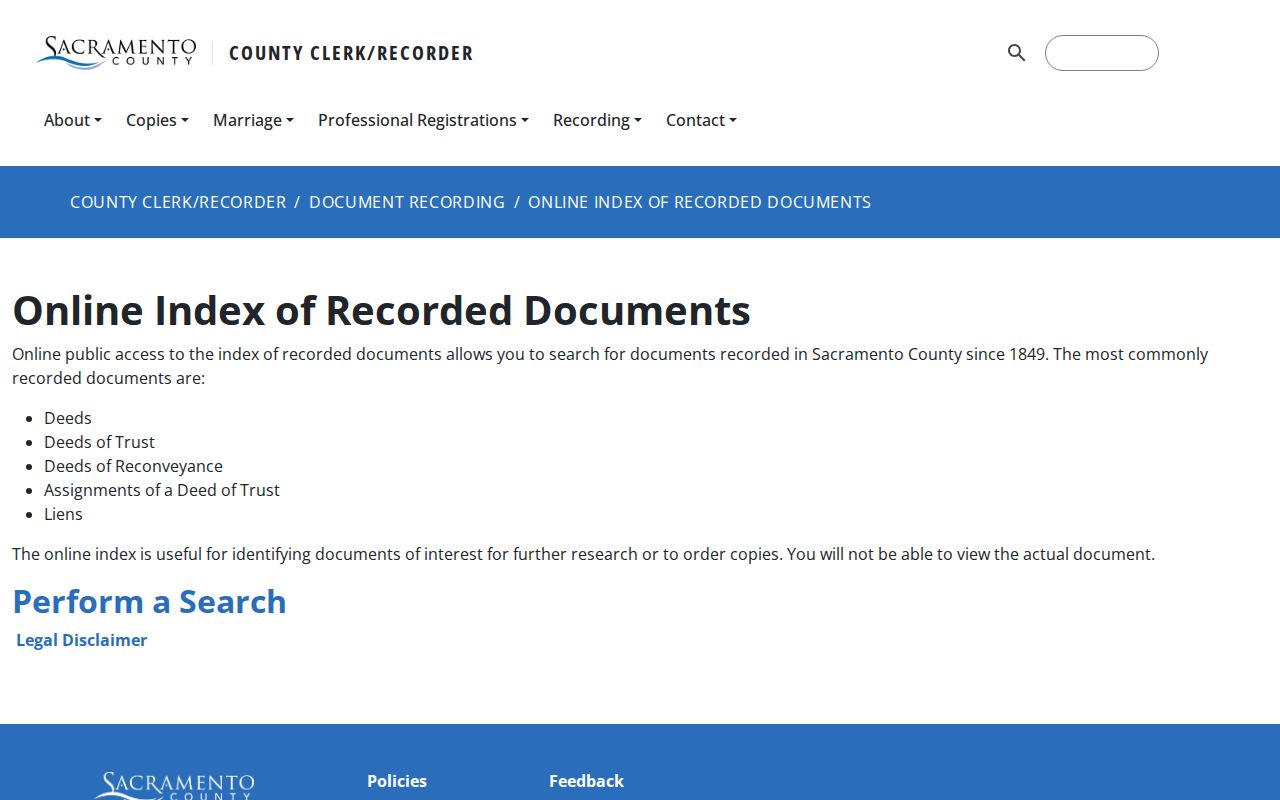
When a Galt deed image is ordered, compare its grantor, grantee, legal description, execution date, recording date, and APN to the parcel record.
Recent Galt Permit Records Date Changes
Galt's Building Division at 495 Industrial Drive handles building, plumbing, mechanical, and electrical permits. Its iWorQ page is for new applications, not a public historic search. Minor plumbing or water-heater, mechanical or HVAC, electrical or panel, remodel or window, reroof, and demolition applications can move through that workflow without an account. Other permits use mail or counter channels.
Galt's monthly issued-permit PDFs cover 2024, 2025, and January through June 2026 in the research capture. The report columns and any person-name field were not verified because the PDFs returned access errors. Use a Galt report as address-dating evidence, then ask the Building Division for older ledgers, plans, inspection cards, or a focused CPRA search by exact address or APN.
Galt Code Compliance at 380 Civic Drive handles property maintenance, zoning, substandard or unsanitary dwellings, unregistered vehicles, and nuisance or health complaints. It has no public case-search portal. A narrow request can ask for a case log or closed file, while sensitive complainant or enforcement material may be withheld.
Note: A Galt permit date records a project or application event, not a confirmed move-in date.
Galt Street Records in 500 Feet
City planning's 500-foot notice practice is a useful block tool when a Galt project file contains it. The official packet requires names and mailing addresses for owners within 500 feet, drawn from the most recent assessment roll. The file itself warns that record owners may not reside at the property. That warning makes the list valuable for owner geography and weak as a complete resident list.
The FY2023-24 Galt fee schedule listed a $694.86 500-foot radius service, but the current fee needs verification. A Galt planning notice list can lag transfers, and it is tied to a particular project, date, and purpose. Pair it with the Parcel Viewer and the current secured roll rather than treating the radius as a live block roster.
For older or missing Galt project files, the Galt public-records request route accepts an identifiable record request. Narrow the request by address, APN, department, project, and date.
The Galt Street Grid Behind Addresses
Galt was laid out as a rail town in 1869, and the original street grid followed diagonal railroad tracks rather than a neat cardinal pattern. That history can make a historic map, legal description, and modern street view look out of line even when they describe the same area. Align the railroad-oriented map, subdivision or lot-block description, and current parcel map before deciding that an old address is wrong.
Galt city history also carries a source conflict. One official account credits the Central Pacific, while another Galt city PDF says Western Pacific after Dr. Obed Harvey persuaded the railroad to cross his land. Both agree on the 1869 rail-town origin. A careful Galt street directory records the conflict and cites the source instead of smoothing it away.
Galt Public Works Technical Services maintains engineering plans, surveys, and GIS or mapping records. The records can explain a Galt street-name change or lot-line action, but research did not find a verified historical renumbering year or numbering formula.
Galt Reverse Street Directory Gap
A reverse or criss-cross directory would arrange Galt entries by street and number and could add occupants to the owner trail. No verified Galt run, publisher, shelf call number, or actual entry was located in official accessible sources. The California State Library and Sacramento Room should be asked whether a title explicitly includes Galt, which years survive, whether the pages are reverse arranged, and what copying rules apply.
Until staff confirms a Galt volume, use the general reading convention only as a research hypothesis. Older Galt entries may abbreviate given names and occupations, put a spouse in parentheses, show a residence, or mark a widow. A sample Galt entry has not been inspected. Never present those fields as a verified Galt record.
For current Galt by-address work, the secured roll, Recorder, planning file, permit report, and lawful voter-file route are the documented channels. Galt historical directory research belongs with the library and archive staff.
Galt Parcel Records Are Not Surveys
The Galt Assessor maintains more than 9,500 maps and about 475,000 parcels. Its Galt GIS services can publish parcel or APN, coordinates, lot or size, status, type, street, zone, land use, tax area, neighborhood, city, ZIP, subdivision, and lot data. The public Galt map helps browse one street and its neighboring polygons. It is still an assessment graphic.
Galt GIS updates can lag about four weeks, and aerial overlays may shift the apparent line by about ten feet. The public interface has no verified radius or buffer button. Click surrounding polygons one at a time, save each APN, and compare the Galt legal description or plat when ownership or a lot line matters.
See the Assessor parcel-map guidance before relying on a map. This image is a visual aid for a Galt street directory, not a survey.
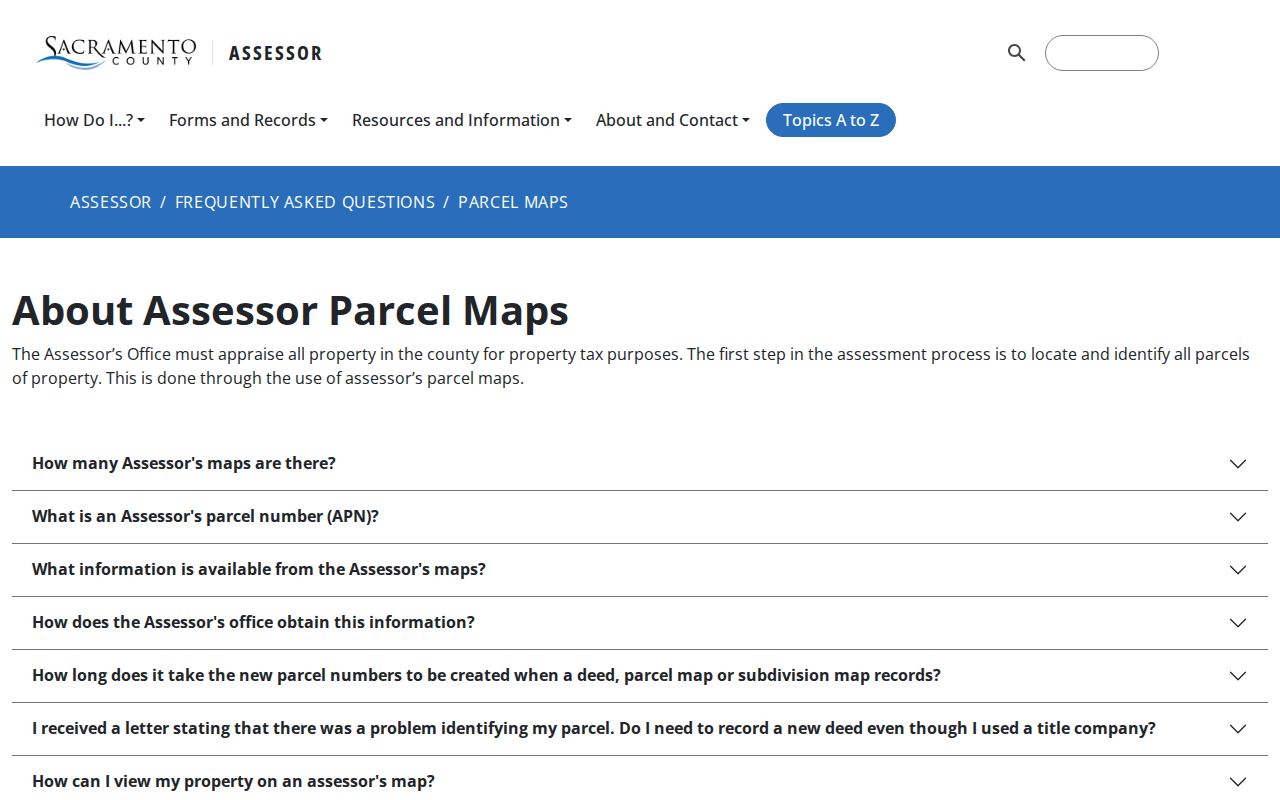
When a Galt boundary affects a deed chain, use the recorded plat, lot-line record, or legal description held by the proper office.
What a Galt Street Directory Cannot Show
No public Galt street directory comprehensively lists renters, household members, utility customers, delivery recipients, or every person who visits an address. DMV address data is limited by the federal Driver's Privacy Protection Act and California rules. Voter registration is restricted by Elections Code sections 2188, 2194, and 2157.2. The Parcel Viewer owner suppression and Safe at Home protections are access features, not search failures.
A Galt person can have a mailing address that differs from the situs. An inactive or cancelled Galt voter entry is not a precise move date. A Galt deed party may be an investor, trustee, lender, or heir. Put those limits beside the result when you save a street record.
Lawful use. Galt address records are for personal, lawful research, family history, civic review, and ordinary safety awareness. Do not use them to stalk, harass, intimidate, or expose another person. Access conditions from the custodian still apply.