
Looking Up Galt Neighbors Around One Address
A Galt block lookup has a clear public starting set and clear gaps. The Galt Parcel Viewer can locate the target parcel and the polygons around it. The Galt secured roll can add record owner, situs, mailing, and exemption fields through the Assessor's lobby or a focused request. A Galt planning 500-foot list can show owners for a defined project. Galt permit and code files can date work. Galt voter data is restricted, and Galt private association membership is not a general public list.
| Source | What it shows about a block | Access |
|---|---|---|
| Galt Assessor Parcel Viewer | Parcel shapes, APNs, subdivision, nearby polygons | Free online map |
| Galt secured assessment roll | Owner, mailing, situs, exemption fields | Lobby computer or request |
| Galt 500-foot planning list | Record owners and mailing addresses near a project | Project file or CPRA |
| Galt permit and code files | Recent work, cases, and releasable contacts | Reports or focused request |
| Galt voter file | Approved-purpose registration and participation fields | Application and statutory purpose |
| Galt private HOA or CC&R records | Development governance, not a public member list | Private rules vary |
Galt owners and occupants are not interchangeable. A Galt block record should say whether a name is tied to land, a mailing address, a project notice, a public filing, or a historical clue.
Mapping a Galt Block by Parcel
The Sacramento County Assessor Parcel Viewer has no verified public radius or buffer button. The reliable Galt method is one parcel at a time. Search the target Galt address or APN, zoom until Galt parcel boundaries and APNs display, click each surrounding Galt polygon, and save the APN before looking up its fields. Do not infer a Galt street number from the shape alone.
- Enter the target Galt address or APN and record the situs, parcel map, subdivision, and lot information.
- Zoom to the Galt block and click each adjacent polygon individually.
- Write down each Galt APN, then compare the public map and secured-roll fields.
- Use the Galt 500-foot planning list only when an existing project file supplies one.
- For a whole named street and its deed chain, switch to the Galt by-street record route.
Galt GIS updates can lag about four weeks, and Galt aerial overlays may shift the apparent line by about ten feet. Galt parcel lines are assessment graphics, not surveys. A Galt legal description or recorded plat controls when a boundary matters.
Galt Neighbors: APNs Not Numbers
Galt neighbor searches go wrong when a Galt map polygon is translated into a street number by eye. Save Galt APNs, map book and page clues, subdivision and lot-block references, and the exact source date. A Galt APN can change after a parcel division, merger, lot-line action, or tax-rate change, so keep the Galt legal description when the land history matters.
Three Galt address fields have different meanings. Galt situs is the physical parcel. Galt mailing is where the owner receives notices. A Galt ZIP is a delivery area. None is a full household list. A Galt homeowner exemption can suggest owner occupancy, but it does not prove who else is at the address. These distinctions keep a Galt neighbor result narrow and accurate.
- APN
- A 14-digit Galt assessor parcel number used to connect map and roll fields.
- Adjacent parcel
- A nearby Galt mapped polygon selected from the parcel viewer, not a confirmed social relationship.
- Situs
- The Galt physical property address.
- Mailing address
- The Galt correspondence address for the record owner, which may be elsewhere.
- 500-foot list
- A Galt project-specific owner-notice list, not a live resident roster.
Galt Neighbors in 500 Feet
Galt planning's 500-foot notice practice can add a second Galt block view. An official Galt project packet requires names and mailing addresses of owners within 500 feet from the most recent assessment roll. The packet warns that record owners may not reside at the property. That warning is central: the Galt list is owner-notice geography tied to a project, date, and purpose.
The FY2023-24 Galt fee schedule listed a $694.86 500-foot radius service, but the current fee needs verification. A Galt project packet can lag a transfer and may not exist for the block being studied. Ask for a specific Galt planning file or CPRA record by project, address, APN, and date. Do not request a broad list and call it a neighbor directory.
The Galt planning maps help establish the geography before a request goes to City Hall or Sacramento County.
Galt Neighbors and Owners May Live Elsewhere
The Galt Assessor's mailing field can point away from the parcel. The Galt owner may be an absentee owner, a trust, an estate, or an entity. A Galt care-of line may route tax mail through another person. The Galt map can therefore show an owner connection without showing who uses the home. Galt neighbors should be described as record owners only when that is what the roll says.
Galt tax bills can show levy, rate, and paid or delinquent status through the ePropTax route, but they do not confirm residence. Galt Recorder deeds add parties and legal descriptions. Galt planning notices add a project-specific owner list. Galt household members and people who do not own the land usually require a different, historically bounded source.
Keep these facts apart in notes: parcel owner, owner mailing address, situs, project notice recipient, and occupant clue. A clear label is more useful than a longer list.
Galt Neighbors and Voter Limits
Sacramento County My Voter Portal is a self-lookup for an elector. It is not a public street or name roll. California voter data can be released only to approved election, scholarly, journalistic, political, governmental, candidate, or measure purposes under Elections Code sections 2188, 2194, and 2157.2. The statewide voter-file request rules describe the allowed purposes. Commercial use is prohibited and can be a misdemeanor.
An approved file may include name, date of birth, registration date, residence or mailing address, precinct, party preference, and participation by election, date, and method. It never gives ballot choices. Driver-license numbers, Social Security numbers, signatures, and Safe at Home records are not released. County applications go to Campaign Services with a purpose declaration, identification, and payment.
Do not replace the restricted voter route with a guessed Galt neighbor list. Use parcel maps and project notices for public block geography, then stop where the law stops.
Galt Neighbors: Associations and Records
Research found evidence that Cedar Flats Estates documents include development-specific HOA or CC&R governance. It did not find a public Galt umbrella association, member roster, or comprehensive neighborhood directory. Galt Code Compliance expressly does not enforce private CC&Rs. A private association may publish a contact page or provide records under its own rules, but its membership is not a city roll.
| Community layer | What is verified |
|---|---|
| Cedar Flats Estates documents | Development-specific HOA or CC&R evidence; no public member directory verified. |
| Galt Code Compliance | Handles city code scope and excludes private CC&R enforcement. |
| Galt Area Historical Society | Public archive, photos, newsletters, and area history; no public member roster. |
Use a community's published contact channel for a voluntary question. Do not infer membership from a parcel, a street, or a shared ZIP.
A Galt Block's Consumer Privacy Layer
California privacy rights matter when a Galt neighbor search reaches data-broker copies. The California Consumer Privacy Act, Civil Code section 1798.100 and following, gives covered consumers rights to know, delete, correct, opt out of sale or sharing, limit sensitive-personal-information use, and avoid discrimination. The Attorney General's 2026 notice explains the Delete Act's DROP, which gives one deletion request path to more than 500 registered brokers, with broker deletion duties beginning August 1, 2026.
DROP affects broker copies, not the true deed, docket, assessment roll, or public legal description. Safe at Home offers substitute address and confidential voter registration for eligible survivors, but it does not erase older public records. A Galt block map should respect those limits instead of trying to fill a protected gap.
The California Attorney General privacy guidance is the source for the consumer-rights layer shown below.
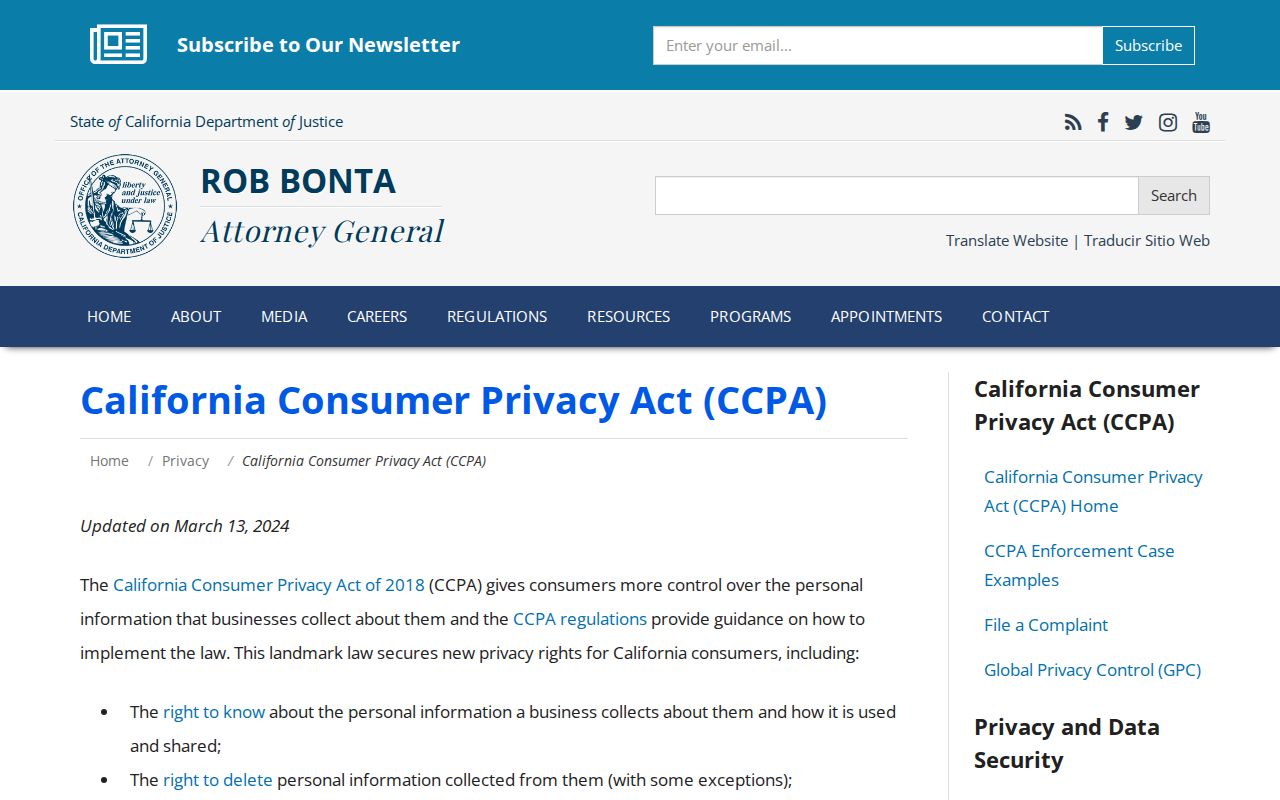
Privacy rights help explain why a commercial compilation may differ from a government record and why deletion from one does not erase the other.
Galt Neighbors: Custody and Registry
Some public search pages are narrow systems, not block directories. California Megan's Law requires a disclaimer and warns that name, age, and address can misidentify someone. Some entries show a full address, some only a ZIP, and some are excluded. Penal Code section 290.46 provides consequences for harassment or non-protective misuse.
Federal BOP covers federal custody from 1982 to the present and searches by register number or name. Results can show name, register number, age, race, sex, release date, and location. Sacramento Sheriff uses name or XREF and provides SIRENS notifications. None of these systems tells who lives on a Galt block. Use them only for their stated custody or registry purpose.
The California Megan's Law disclaimer and the Federal Bureau of Prisons locator are shown below as examples of narrow access systems.
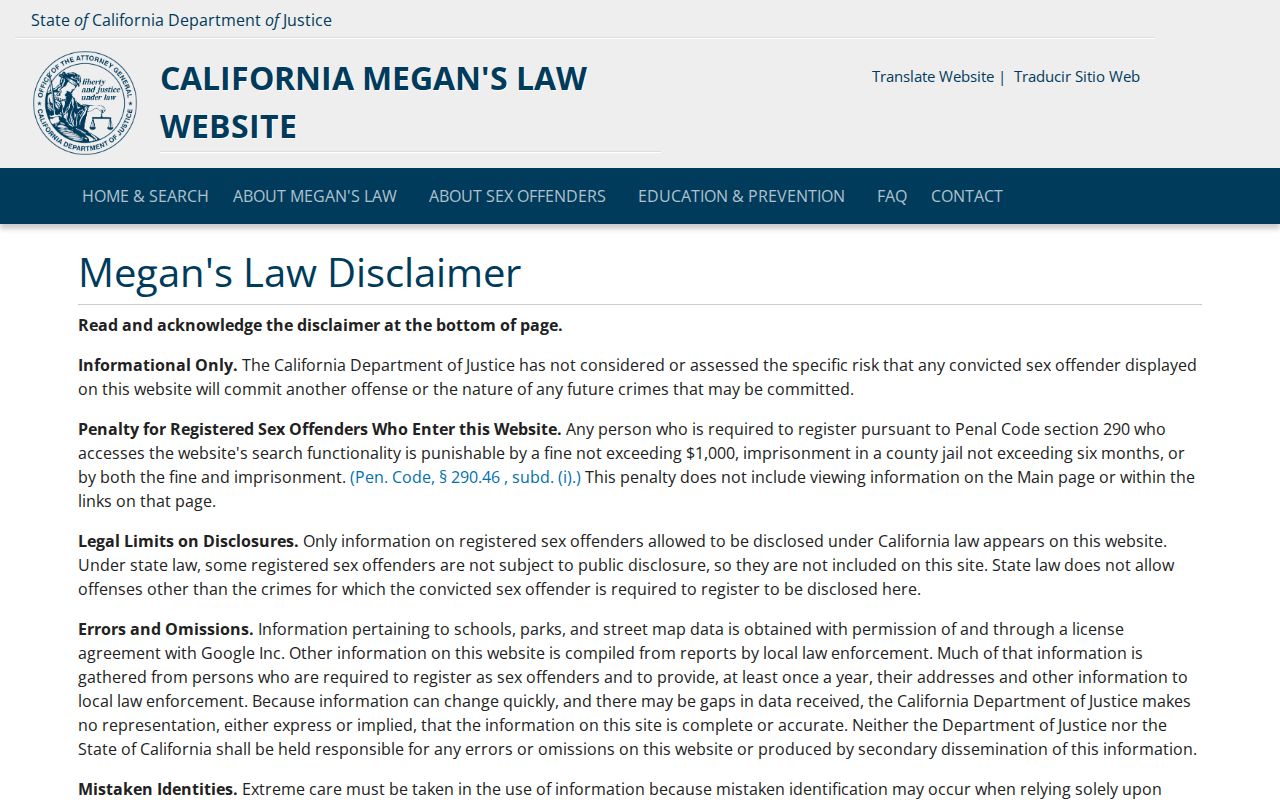
The registry image reinforces the identification warning and the anti-harassment rule.
The Federal Bureau of Prisons inmate locator is the source for the custody image that follows.
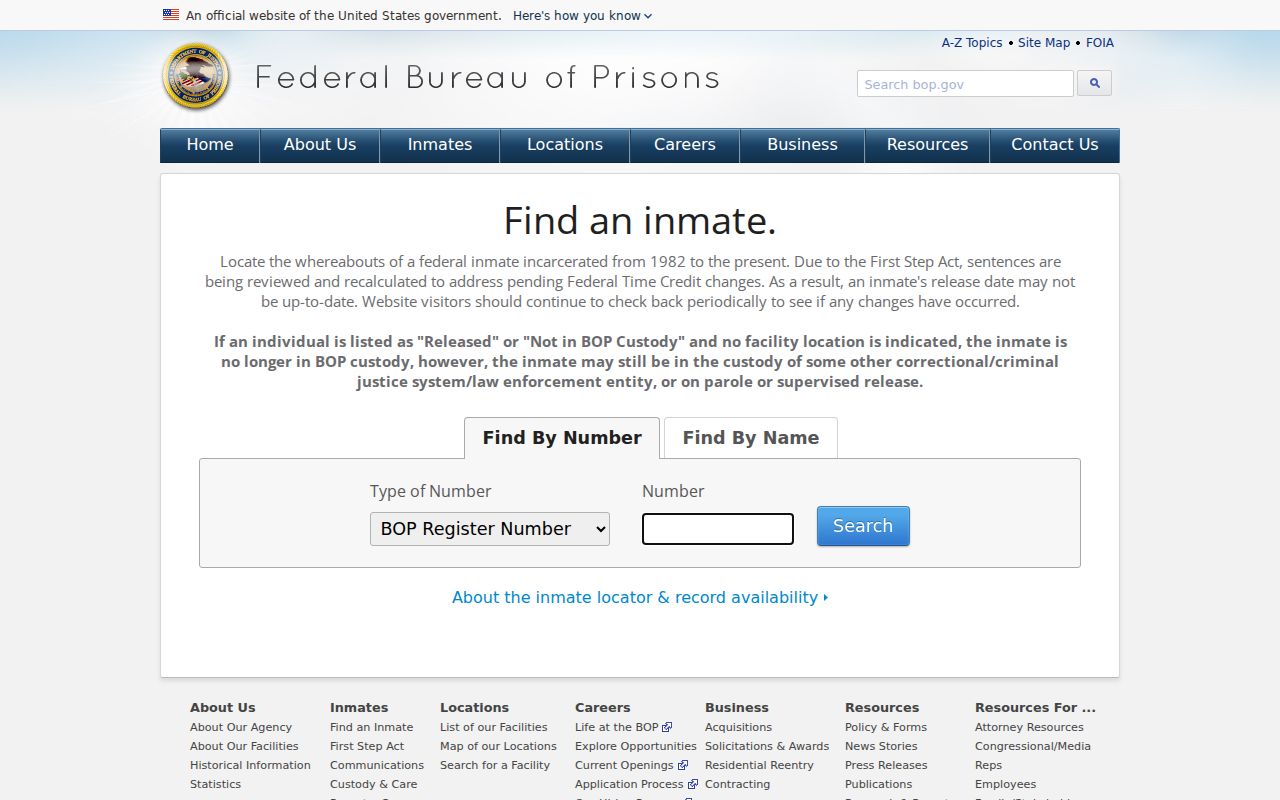
The federal locator is a custody source, not evidence about a neighbor's household or block presence.
Galt Neighbors: Official Rolls Versus Tools
Official rolls and commercial neighborhood tools answer different questions. A county record has a named custodian, a field definition, an access rule, and a date. A commercial compilation may merge public and private feeds, lag behind a change, or join two same-name people. It should never override the source record or a confidentiality rule.
| Category | Strength | Limit |
|---|---|---|
| County parcel and secured roll | Defined APN, situs, owner, mailing fields | Owner is not every occupant; online names are suppressed |
| Planning notice file | Defined project and owner radius | Purpose-specific, can lag transfers, not a live roster |
| Historical library source | Year-bounded household and address clue | Galt title and entry may need staff confirmation |
| Commercial compilation | May gather varied public clues in one view | Source, freshness, identity match, and deletion path can vary |
For a Galt block, the official route is slower but easier to cite. Save the custodian, field, date, and access condition with the result.
Galt Neighbors: Privacy Limits
Public block records do not reveal every household. Renters and family members are not comprehensively indexed, utilities and delivery data are not public directories, and Safe at Home participants can use a substitute address and confidential voter registration. A missing name may be a privacy feature, a different jurisdiction, or a record that is not online.
Use Galt neighbor research to understand parcels, plan a lawful community contact, reconnect with known people, or study local history. Do not copy a protected address into a public list. Do not contact or expose someone because a record suggests a connection.
Lawful use. Neighbor lookups in Galt are for personal, lawful research and safety awareness. Never use an address or name to stalk, harass, intimidate, threaten, or harm anyone.
When the block question becomes a whole-street question, carry the APNs and source dates into the address record chain rather than widening the search by guesswork.